The population is shrinking
East Palo Alto's population has fallen about 3.9% since 2020, even as the region around it grows richer. The median home is worth over $1.1 million in a city where income per person is about $42,301.
Our community
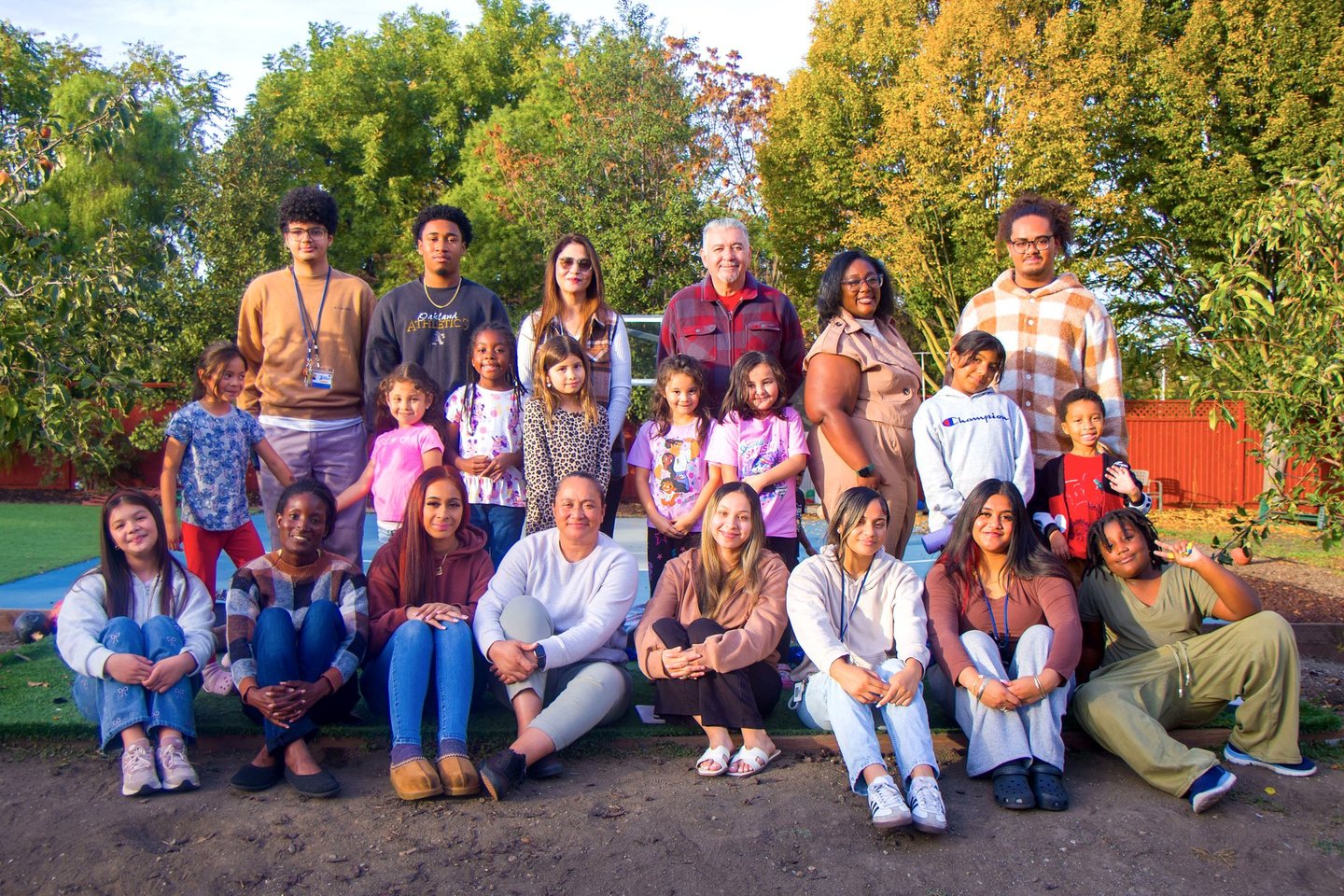
This is a community that built its own schools, won its own city by fifteen votes, and took itself from the nation's murder capital to zero. What it has never been given is a fair share of the wealth built on its doorstep. That part is on the rest of us.
Why we wrote this
People hear "East Palo Alto" and hear "Palo Alto," and assume the children here are surrounded by opportunity. They are surrounded by it. They have rarely been handed it.
The distance between those two facts is not an accident and it is not the fault of a single family. It was built, decision by decision, over a century. The good news, and it is genuinely good news, is that what was built can be rebuilt, and this community has been doing exactly that for sixty years. We are not here to rescue anyone. We are here to be useful to a neighborhood that has always done the work itself.
A short, honest history
This is the ancestral land of the Ohlone people. In the Gold Rush era a speculator tried and failed to build a shipping town here called Ravenswood, and a rancher's landing on the Bay became known as Cooley's Landing.
Charles Weeks founds the Runnymede poultry colony, a cooperative of small farm homes for people who, in his words, "love nature and enjoy plants and animals." Two streets still carry the names Weeks and Runnymede. Runnymede and Ravenswood come together in 1925 as East Palo Alto, and the town stays unincorporated while its neighbors grow up around it.
A substantial Japanese American community works the area's flower-growing trade until they are forced out and incarcerated during World War II. Their absence reshapes who lives here next.
Black families arrive in large numbers, in part because, unlike the surrounding Peninsula, East Palo Alto had few restrictive housing covenants. It was not the place they were welcomed. It was the place they were not barred from. San Mateo County today names blockbusting as a cause of the poverty that followed. Within about a decade the town goes from nearly all white to roughly 80% Black. Meanwhile neighboring cities annex the tax-generating land, leaving 2.5 square miles of mostly homes.
The community builds what it is denied. Gertrude Wilks starts what becomes the Nairobi Day School after a decade of trying to integrate local schools; it opens with ten pupils in a home and runs until 1984, taught partly by Black professionals who could not get hired elsewhere. Robert Hoover founds Nairobi College in 1969, where every student owes four hours a day of service in the community. The Nairobi Shopping Center brings a co-op grocery, small businesses, and the community's first permanent county library branch. The motto is Uhuru Na Umoja: freedom and unity.
Residents vote on renaming the town Nairobi, as a way to step out from under the era's segregation. The measure does not pass, but the name has never left the place's memory.
East Palo Alto becomes a city, by fifteen votes: 1,782 to 1,767. Robert Hoover, who founded Nairobi College, helps lead incorporation. Gertrude Wilks sued to stop it, worried the new city lacked the tax base to survive, and then served on its first City Council. Both things were true at once. That is what it looks like when people fight for a place they love.
The hardest year. Forty-two homicides among roughly 24,000 residents, the highest per-capita rate in the country. The county's own account names the causes plainly: a community already made poor by blockbusting, a new city short on revenue, the crack epidemic, and police corruption and misconduct that broke trust and fed the violence.
Whiskey Gulch, the city's main commercial strip, is cleared for the University Circle development. By the city's own record, more than 150 families, 40-plus businesses, and 12 nonprofit agencies are relocated, including the city's only full-service supermarket. The land's assessed value goes from $7.3 million in 1988 to $422 million by 2009. Few of the displaced businesses found space to return to.
Zero homicides. The first time in the city's history, and then again two years later. Police Chief Jeff Liu called it "the hugest community accomplishment possible," and credited local churches, afterschool programs, and community leaders.
Why justice, not charity
Every hard thing about East Palo Alto's position was chosen by somebody, and usually by somebody who did not live here. That is the difference between a tragedy and an injustice. A tragedy is nobody's fault. This has authors.
Black families came here in large part because the surrounding Peninsula used racial covenants to keep them out, and East Palo Alto had few. This was not the place they were welcomed. It was the place they were not barred from.
San Mateo County's own published history names blockbusting as a cause of the poverty that followed. Fear was stoked, homes were churned, and the wealth that normally builds through a house was drained out of the families who bought in.
Neighboring cities annexed the tax-generating land around it. What remained is 2.5 square miles of mostly homes: a city expected to fund its own schools, streets, and safety on almost no commercial base.
The county's account of the 1992 crisis names police corruption and misconduct among its causes, which in its words "only diminished relations between residents and law enforcement, perpetuating violence." The community was failed twice: by the violence, and by the response to it.
Clearing Whiskey Gulch for University Circle relocated more than 150 families, 40-plus businesses, and 12 nonprofit agencies, and cost the city its only full-service supermarket. By the city's own record, only about 15 to 20% of those households managed to buy a home anywhere in the Bay Area. The land's assessed value went from $7.3 million to $422 million.
By 2008 a single company controlled roughly 1,800 units, more than half of the city's rent-regulated affordable housing, on a strategy that depended on pushing tenants out, and went to court to weaken the city's rent control.
But let justice roll on like a river,righteousness like a never-failing stream.
Amos 5:24, the verse our founders started with
Hope Horizon began in 1984 with a handful of Stanford students reading the prophet Amos and sitting under the teaching of civil-rights leader Dr. John Perkins. They did not come to East Palo Alto because it was pitiable. They came because they had just been handed a conviction: that justice is not a feeling you have about a place, it is something you do, on a specific street, for specific kids, for a very long time.
That distinction still runs the whole operation. Charity hands something over and goes home. Justice stays until the gap closes. Forty years in, we are still here, because the gap is still here.
"East Palo Alto has closed 2025 with zero murders, a testament to what is possible when a community stands together. This achievement belongs to our residents, families, community organizations, and first responders."East Palo Alto Police Department, January 2026
East Palo Alto today
About 29,000 people live in East Palo Alto's 2.5 square miles. Roughly 59% are Hispanic or Latino, about 9% are Black, and nearly 8% are Native Hawaiian or Pacific Islander. Around 44% were born outside the United States, and about two thirds speak a language other than English at home. Households are large, averaging 3.5 people.
The community keeps its own record. Residents founded the East Palo Alto Community Archive in 2023 and publish it in English, Spanish, Lea faka-Tonga, and Gagana Samoa. In January 2026 the city signed a Sister City partnership with the Kolofoʻou District of Tonga, the first ever between Tonga and a United States city, rooted in the aid East Palo Alto sent after the 2022 tsunami.
This is not a community waiting for someone to speak for it.
The part that is still getting harder
East Palo Alto's population has fallen about 3.9% since 2020, even as the region around it grows richer. The median home is worth over $1.1 million in a city where income per person is about $42,301.
Black residents fell from 15.6% of the city in 2010 to about 9.5%. Pacific Islanders fell from 10.9% to about 7.8%. The families who made this place what it is are leaving because they cannot afford to stay.
Ravenswood City School District now enrolls about 2,432 students, more than half of them English learners. In 2024-25, about 12% met state standards in English, against roughly 49% statewide.
Why these kids deserve everyone
A child in East Palo Alto is born within walking distance of companies that reshaped the world, and into a city where fewer than three in ten adults hold a bachelor's degree, against more than eight in ten a few blocks away. She did not choose that. She just lives inside the answer to a hundred decisions made before she was born.
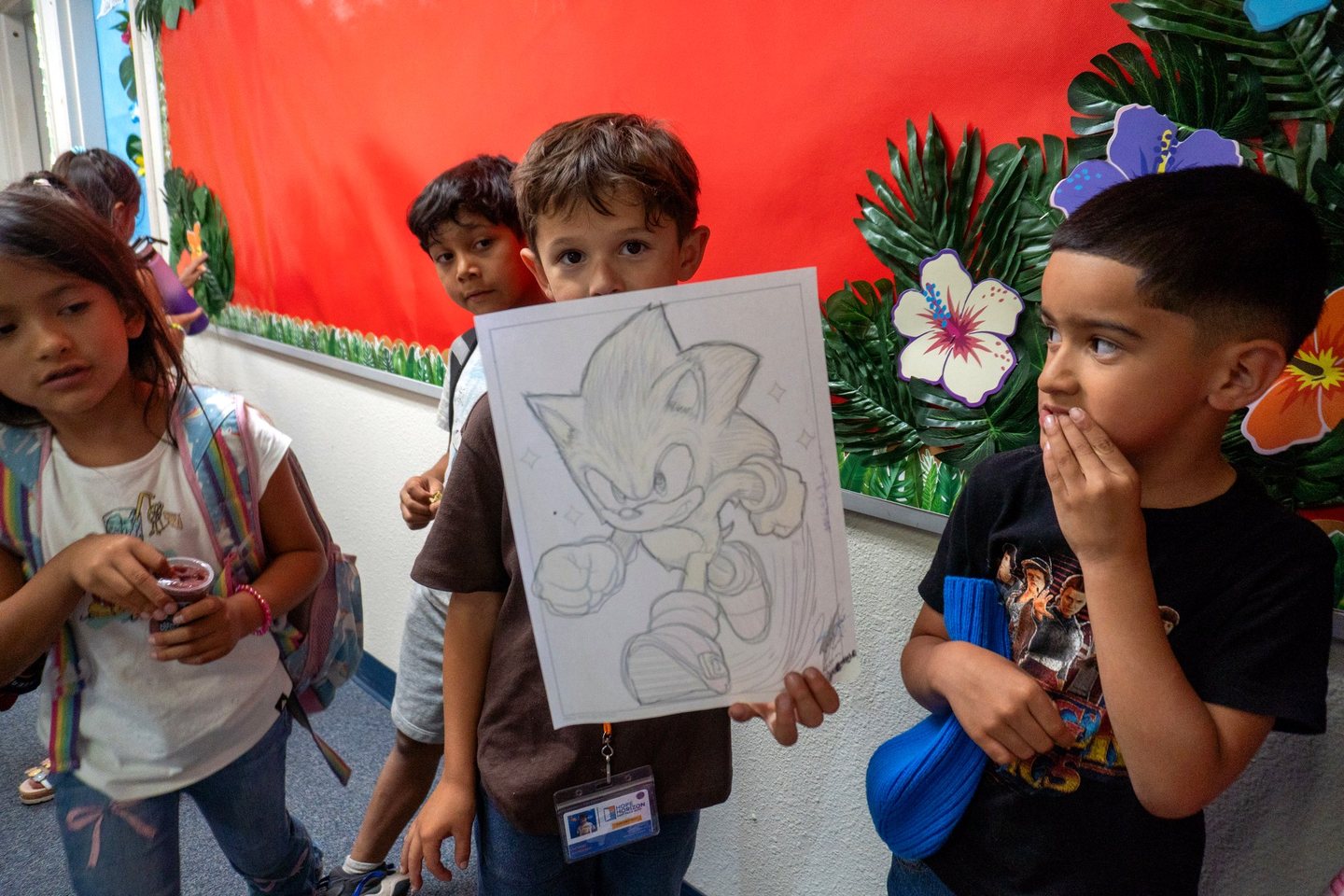
Here is what forty years here has taught us. Nothing about that gap is fixed. It closes the same way it opened, one decision at a time, except this time the decisions are ordinary and good: an hour of tutoring on a Tuesday, a mentor who keeps showing up, a robotics season, a scholarship, a steady monthly gift that lets us promise a kid a whole year.
And notice who the police chief thanked when this city reached zero. Churches. Afterschool programs. Community leaders. That is not a coincidence, and it is not a small thing. It is the plainest evidence we have that showing up for kids changes what a whole city becomes.
You would not be rescuing this community. You would be joining a sixty-year tradition of it taking care of its own, and finally putting some of Silicon Valley's abundance on the right side of the ledger.
Common questions
Put your weight on the right side
Hope Horizon has been here since 1984, and we serve about 120 East Palo Alto students a day. Tutor one of them, give monthly, or bring your church or company alongside.
Sources
Income, education, demographics, household size, home value, and land area: U.S. Census Bureau QuickFacts, East Palo Alto and Palo Alto.
History, blockbusting, incorporation, 1992, and the decline in violence: San Mateo County, History of East Palo Alto.
Zero homicides and Chief Liu's remarks: CBS News Bay Area (2026) and League of California Cities (2024).
Nairobi era, borders with Meta and Alphabet, displacement, and the rent-regulated housing controlled by Page Mill Properties: Kimberley S. Johnson, Metropolitics (2023). Nairobi Day School: Journal of Negro Education (1992). Nairobi College: ERIC (1969). Gertrude Wilks: Palo Alto Online (2019).
Runnymede: Menlo Park Historical Association, via The Almanac.
Whiskey Gulch and University Circle: City of East Palo Alto.
Schools: California Department of Education, Ravenswood City Elementary; proficiency via The Almanac (2025).
Community Archive: East Palo Alto Community Archive. Sister City: U.S. Embassy in Tonga (2026).